Thursday, June 22, 2006

Report Finds Half of Breast Cancer Causes May Be Environmental

State of Evidence 2006: Breast Cancer

U.S. Women’s Lifetime Risk for Breast Cancer
Has Nearly Tripled since 1964

SAN FRANCISCO — Women in the United States still have a high risk of breast cancer even if they have no genetic predisposition or other commonly-accepted risk factors for the disease, according to a report released today.

“State of the Evidence 2006: What Is the Connection Between the Environment and Breast Cancer?” reports that as many as 50 percent of breast cancer cases remain unexplained by either genetics or lifestyle factors, such as a woman’s age at her first full-term pregnancy or alcohol consumption.

Instead, the report says, “compelling scientific evidence points to some of the 100,000 synthetic chemicals in use today as contributing to the development of breast cancer, either by altering hormone function or gene expression.” The report also identifies radiation exposure, such as that from X-rays and CT scans, as the “longest-established environmental cause of breast cancer.”

“State of the Evidence 2006,” which reviews and analyzes nearly 350 scientific studies on environmental links to breast cancer, was jointly published by two San Francisco-based organizations, the Breast Cancer Fund and Breast Cancer Action. The report was peer-reviewed by leading scientists at the University of Pittsburgh Cancer Institute, Tufts University School of Medicine, Columbia University and other research institutions.

This is the fourth edition of “State of the Evidence;” the 2006 edition reports findings from more than 46 new studies published during 2004 and 2005.

In 2005, breast cancer was expected to kill more than 40,000 women in the United States—one death every 13 minutes—and more than 410,000 women worldwide. U.S. women now have a one in seven chance of being diagnosed with breast cancer during their lifetimes, a risk that has nearly tripled in the past four decades.

“Considerable resources are spent each year to encourage women to make changes in their personal lives that might reduce the risk of breast cancer,” said Jeanne Rizzo, R.N., executive director of the Breast Cancer Fund. “But many factors that contribute to the disease lie far beyond a woman’s personal control and can only be addressed by a revolution in thinking on the parts of government and the private sector.”

“This report adds to the compelling evidence that the chemicals we’re exposed to in our daily lives are making us sick,” said Lisa Wanzor, acting executive director of Breast Cancer Action. “Women living with and at risk for breast cancer need public policies that will put our health first and protect us from exposures to toxic chemicals.”

Among the research findings reported in the 2006 edition:

• Genetic susceptibility makes only a “small to moderate contribution” to the incidence of breast cancer, according to a re-analysis of a large Scandinavian study originally published in 2000;

• An interdisciplinary analysis of the history of hormone replacement therapy revealed that scientists were aware of its breast cancer risk as early as the 1930s. The expert analysts asked why, for decades since the 1960s, millions of women were prescribed powerful pharmaceutical agents known to be carcinogenic;

• Women living within one mile of hazardous waste sites containing common herbicides and pesticides such as 2,4-D and chlordane had an increased risk of breast cancer, a study conducted on Long Island, N.Y., found. Researchers working in Iowa and North Carolina also found an increased risk of breast cancer among the wives of farmers who used certain chlorinated pesticides and among those living closest to areas of pesticide application. In California, certain pesticides and herbicides were associated with increased risk of breast cancer in Latina agricultural workers;

• There is no safe dose of ionizing radiation. Even the smallest dose has the potential to cause an increased cancer risk in humans, according to a report from the National Research Council; and

• Chemicals called phthalates, which are ubiquitous in personal care products, were shown to significantly increase cell proliferation in human breast cancer cells. Scientists also found that certain phthalates inhibited the effectiveness of tamoxifen, one of the most widely prescribed breast cancer treatments, in killing MCF-7 breast cancer cells.

The new report offers a 10-point plan to reduce the risk of breast cancer and ultimately end the epidemic. Among those recommendations:

• Establish environmental health tracking programs to monitor toxic exposures at state and federal levels;

• Protect workers from hazardous exposures;

• Hold corporations accountable for hazardous practices and offer local, state and federal incentives for clean, green practices; and

• Create a comprehensive chemicals policy based on the precautionary principle, which would obligate producers of chemical and radiological products to assess the health, safety and environmental impacts of their products before introducing them or releasing them.

# # #

Click here to read the Executive Summary of the report »
Click here to download the full-length PDF of State of the Evidence 2006 »

For more information about breast health. see The Breast Cancer Resource.

Sunday, June 11, 2006

Oldenlandia Diffusa Bai Hua she she Cao

I have written about oldenlandia- bai hua she she cao in an earlier post. I have used this herb as the king ingredient of a formula to help a patient with Hodgkins Lymphoma significantly control her recurrent disease without conventional care for more than 2 years.

The Asian Anti-cancer Materia Database lists Oldenlandia Diffusa on their website.

16 article abstracts on Oldenlandia Difffusa a.k.a. bai hua she she cao from pub med.


Liang ZT, Jiang ZH, Leung KS, Peng Y, Zhao ZZ. Related Articles, Links
Abstract Distinguishing the medicinal herb Oldenlandia diffusa from similar species of the same genus using fluorescence microscopy.
Microsc Res Tech. 2006 Apr;69(4):277-82.
PMID: 16586483 [PubMed - indexed for MEDLINE]
2: Kim DH, Lee HJ, Oh YJ, Kim MJ, Kim SH, Jeong TS, Baek NI. Related Articles, Links
Abstract Iridoid glycosides isolated from Oldenlandia diffusa inhibit LDL-oxidation.
Arch Pharm Res. 2005 Oct;28(10):1156-60.
PMID: 16276972 [PubMed - indexed for MEDLINE]
3: Gupta S, Zhang D, Yi J, Shao J. Related Articles, Links
Abstract Anticancer activities of Oldenlandia diffusa.
J Herb Pharmacother. 2004;4(1):21-33.
PMID: 15273074 [PubMed - indexed for MEDLINE]
4: Shan BE, Zhang JY, Du XN. Related Articles, Links
Abstract [Immunomodulatory activity and anti-tumor activity of Oldenlandia diffusa in vitro]
Zhongguo Zhong Xi Yi Jie He Za Zhi. 2001 May;21(5):370-4. Chinese.
PMID: 12577425 [PubMed - indexed for MEDLINE]
5: Lu H. Related Articles, Links
Abstract [Origin confirmation of a new natural product from Oldenlandia diffusa]
Zhong Yao Cai. 1998 Jun;21(6):299-301. Chinese.
PMID: 12567524 [PubMed - indexed for MEDLINE]
6: Chung HS, Jeong HJ, Hong SH, Kim MS, Kim SJ, Song BK, Jeong IS, Lee EJ, Ahn JW, Baek SH, Kim HM. Related Articles, Links
Free Full Text Induction of nitric oxide synthase by Oldenlandia diffusa in mouse peritoneal macrophages.
Biol Pharm Bull. 2002 Sep;25(9):1142-6.
PMID: 12230105 [PubMed - indexed for MEDLINE]
7: Shan BE, Yoshida Y, Sugiura T, Yamashita U. Related Articles, Links
Abstract Stimulating activity of Chinese medicinal herbs on human lymphocytes in vitro.
Int J Immunopharmacol. 1999 Mar;21(3):149-59.
PMID: 10348365 [PubMed - indexed for MEDLINE]
8: Yoshida Y, Wang MQ, Liu JN, Shan BE, Yamashita U. Related Articles, Links
Abstract Immunomodulating activity of Chinese medicinal herbs and Oldenlandia diffusa in particular.
Int J Immunopharmacol. 1997 Jul;19(7):359-70.
PMID: 9568540 [PubMed - indexed for MEDLINE]
9: Wong BY, Lau BH, Jia TY, Wan CP. Related Articles, Links
Abstract Oldenlandia diffusa and Scutellaria barbata augment macrophage oxidative burst and inhibit tumor growth.
Cancer Biother Radiopharm. 1996 Feb;11(1):51-6.
PMID: 10851520 [PubMed - indexed for MEDLINE]
10: Luo H. Related Articles, Links
Abstract [Treatment of upper respiratory infection with mixt. 716 compound]
Zhongguo Zhong Xi Yi Jie He Za Zhi. 1993 Dec;13(12):730-2, 709. Chinese.
PMID: 8136647 [PubMed - indexed for MEDLINE]
11: Wong BY, Lau BH, Yamasaki T, Teel RW. Related Articles, Links
Abstract Inhibition of dexamethasone-induced cytochrome P450-mediated mutagenicity and metabolism of aflatoxin B1 by Chinese medicinal herbs.
Eur J Cancer Prev. 1993 Jul;2(4):351-6.
PMID: 8358288 [PubMed - indexed for MEDLINE]
12: Wong BY, Lau BH, Yamasaki T, Teel RW. Related Articles, Links
Abstract Modulation of cytochrome P-450IA1-mediated mutagenicity, DNA binding and metabolism of benzo[a]pyrene by Chinese medicinal herbs.
Cancer Lett. 1993 Jan 15;68(1):75-82.
PMID: 8422652 [PubMed - indexed for MEDLINE]
13: Wong BY, Lau BH, Tadi PP, Teel RW. Related Articles, Links
Abstract Chinese medicinal herbs modulate mutagenesis, DNA binding and metabolism of aflatoxin B1.
Mutat Res. 1992 Jun 1;279(3):209-16.
PMID: 1377337 [PubMed - indexed for MEDLINE]
14: Wong BY, Lau BH, Teel RW. Related Articles, Links
Abstract Chinese medicinal herbs modulate mutagenesis, DNA binding and metabolism of benzo[a]pyrene 7,8-dihydrodiol and benzo[a]pyrene 7,8-dihydrodiol-9,10-epoxide.
Cancer Lett. 1992 Feb 29;62(2):123-31.
PMID: 1540939 [PubMed - indexed for MEDLINE]
15: Fang JY. Related Articles, Links
Abstract [Effect of fu-zheng qu-xie on gastric disease infected with Campylobacter pyloridis]
Zhong Xi Yi Jie He Za Zhi. 1991 Mar;11(3):150-2, 133. Chinese.
PMID: 2065393 [PubMed - indexed for MEDLINE]
16: TSAI CT, QIAN XL, JIANG DQ, DJIANG DT. Related Articles, Links
No abstract [CHEMICAL INVESTIGATION OF OLDENLANDIA DIFFUSA (WILLD.) ROXB. I.]
Yao Xue Xue Bao. 1964 Dec;11:809-14. Chinese. No abstract available.
PMID: 14254780 [PubMed - OLDMEDLINE for Pre1966]


Green Day - The Time of Your Life

This song warms my heart. Thanks to my 9 year old son for finding this one.

Tuesday, May 30, 2006

Acupuncture for Post-Thoracotomy pain

ABSTRACT: BACKGROUND: Thoracotomy is associated with severe pain that may persist for years. Acupuncture is a complementary therapy with a proven role in pain control. A randomized trial showed that acupuncture was effective in controlling pain after abdominal surgery (see analysis of this study), but the efficacy of this technique for the treatment of thoracotomy pain has not been established. We developed a novel technique for convenient application of acupuncture to patients undergoing thoracotomy, and in a pilot evaluated the safety of this intervention and the feasibility of doing a randomized trial. METHOD: Adult patients scheduled for unilateral thoracotomy with preoperative epidural catheter placement received acupuncture immediately prior to surgery. Eighteen semi-permanent intradermal needles were inserted on either side of the spine, and four were inserted in the legs and auricles. Needles were removed after four weeks. Using a numerical rating scale, pain was measured on the first five postoperative days. After discharge, pain was assessed using the Brief Pain Inventory at 7, 30, 60 and 90 days. RESULTS: Thirty-six patients were treated with acupuncture. Of these, 25, 23, and 22 patients provided data at 30, 60, and 90 days, respectively. The intervention was well tolerated by patients with only one minor and transient adverse event of skin ulceration. CONCLUSIONS: The rate of data completion met our predefined criterion for determining a randomized trial to be feasible (at least 75% of patients tolerated the intervention and provided evaluable data). This novel intervention is acceptable to patients undergoing thoracotomy and does not interfere with standard preoperative care. There was no evidence of important adverse events. We are now testing the hypothesis that acupuncture significantly adds to standard perioperative pain management in a randomized trial. Read the Full study here

Alex's comment: Even though this study is about a particularly dramatic surgery, I can tell you from my experience press tacs are very good for many types of pain. The use of intradermal needles - very small 1 1mm needles on a sticky backing - is a great way to use acupuncture to extend a regular acupuncture treatment or to use in place of a regular treatment. The advantage of is that they can be safely kept in place for days, thus extending the treatment over a longer period.

My patients report this is effective and pain free. I will often use intradermal needles or ear press tacs. Ear press tacs are the same concept as an intradermal needle but instead of a needle they have a small metal ball on a sticky backing that are pressed on the microsystem points of the outer ear. This too is effective.

Friday, May 26, 2006

Melatonin Use in Cancer Treatment


Melatonin Reduces Pain
Some doctors are noting that melatonin supplementation reduces pain in cancer patients in a metastatic stage of the disease. This seems to be due to the connection between the pineal gland and the opioid system. These metastatic patients were found to have a lower beta-endorphin/melatonin ratio. Italian researchers say “The low beta-endorphin/melatonin ratio observed in metastatic patients suggests the presence of an unbalanced relation between the pineal and the opioid system in those subjects. Therefore, an anomalous relationship between pineal function and opioid activity might play a role in the clinical course of neoplastic disease.. See abstract

Melatonin Reduces Side-Effects of Platin Drugs
Melatonin can also be quite useful for mitigating the side-effects of platnum drugs along with Vitamin E.
In addition to its potential direct antitumor activity, melatonin has proved to modulate the effects of cancer chemotherapy, by enhancing its therapeutic efficacy and reducing its toxicity. The increase in chemotherapeutic efficacy by melatonin may depend on two main mechanisms, namely prevention of chemotherapy-induced lymphocyte damage and its antioxidant effect, which has been proved to amplify cytotoxic actions of the chemotherapeutic agents against cancer cells
See the abstract Five years survival in metastatic non-small cell lung cancer patients treated with chemotherapy alone or chemotherapy and melatonin: a randomized trial.

Additional Melatonin Information
For More information about melatonin on wikipedia Click here.
Literature Review of Melatonin from Memorial Sloane Kettering's website. Click here
Melatonin levels can be tested. See here.

Tuesday, May 23, 2006

Acupuncture Theory Applied To Cancer Treatment


The following article comes from Are Thoreson and his wife Annica Nygrena Thoreson. They are practicing Vetenarians in Sweden.

From a holistic viewpoint we may evaluate the Processes that control a cancerous tumour to be totally normal, even healthy. The normal thing for a cell is to grow and multiply. It is when this growth gets out of control that cancer may arise. This uncontrolled growth may be forced under control again with the help of acupuncture.

In holistic medicine it is most important to stimulate the body's controlling Processes. The idea is to "bring control" to the growth processes; otherwise they become uncontrolled, which is the basic problem with cancerous cells. If we stimulate the wrong Processes, we may aggravate the disorder by stimulating tumour growth. In my opinion, working via the Ko Cycle (Controlling) Cycle is the best way to stimulate the controlling Processes of the body.

Cancer treatment in practice.

First, we must make a Channel Diagnosis, either via Pulse Diagnosis, or by a pure observation of where the tumour has arisen. This is one case where the location of the lesion is very important to indicate the Channel that has lost its control. Let us take mammary cancer as an example. It manifests on ST Channel. We must particularly avoid stimulating ST Channel, but we should stimulate LV, the Ko Controlling Channel of ST. For this, we could use the Ting (Wood) Point (LV01), or Shu-Earth Point (LV03). We should stimulate only the Ko (Controlling) Father Channel, not the Ko (Controlling) Point of ST itself. During the period of treatment, we should stimulate no other Channel or Process. However, we may combine other therapies that stimulate LV.

I have tried this method throughout several years and several colleagues both in the USA and Australia have also, following my instructions, tried it. The results have been very encouraging. Between 80-90% of confirmed cancer cases have improved noticeably. The improvements included increased joy in living, better sleep, increased appetite and a glossier coat. 40-50% have been totally cured of the illness. Tumour(s) have, in such cases, vanished within a few weeks. Two examples:
Read on

I concur . I have used the method outlined in this article with good success for cancer pain and effecting the tumor also.

Tuesday, May 09, 2006

Auricular Acupuncture To Reduce Cancer Related Pain

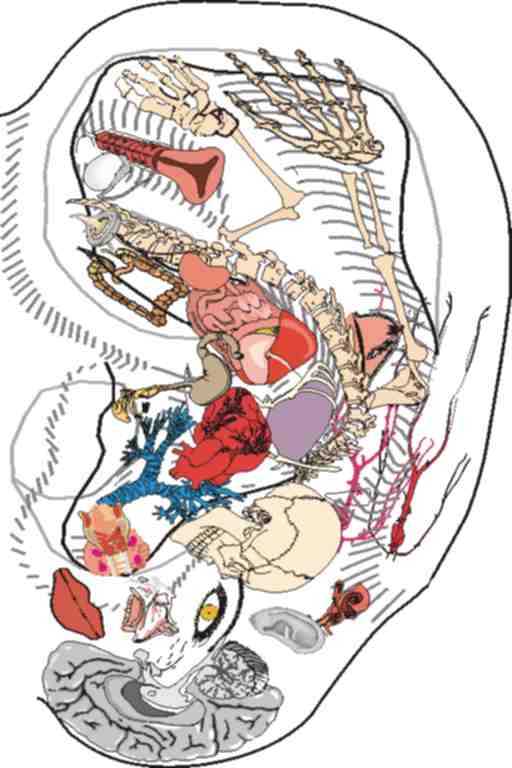
A quick story about ear acupuncture: Just yesterday, I was treating an 84 year old woman one year post-stroke. She was depressed over her circumstance and in acute back pain from a fall. She also had a a left-side tremor. She could not get up on the table so I did auricular acupuncture on her in a chair. During the treatment the tremor had stopped, her back pain was improved and her gait was more spry and so was her mood. Not bad. It is no surprise that auricular acupuncture should be good for cancer related neuropathic pain and this study demonstrates it.

Analgesic Effect of Auricular Acupuncture for Cancer Pain: A Randomized, Blinded, Controlled Trial
"Our study shows that auricular acupuncture at points where an electrodermal signal is detected is associated with a significant reduction in pain intensity in patients with neuropathic pain. It also shows that the reduction in pain is associated with a decline in the average electrical signal detected at ear points. The observed reduction of 20 mm on the VAS is of clear benefit for these cancer patients who, despite stable analgesics, continue to be in pain, especially considering the low cost, low inconvenience, and low risk of auricular acupuncture."
Read the Full Text article.

To someone who has never had ear acupuncture it is usually met with fascination, skepticism and a little (unfounded) fear of needles. "What is the connection", they want to know, "between the ear and the rest of the body?"

Ear acupuncture is not part of the ancient tradition of Traditional Oriental Medicine (TCM). Actually it was developed in France in the 1950's. For an interesting history and mechanism of action click here.

Saturday, May 06, 2006

Lectures On line from Memorial Sloane Kettering

Web Casts

Smart Talk About Cancer From
Memorial Sloan-Kettering

The CancerSmart Community Lectures listed below were recorded and are now being presented on our Web site. To watch, you'll need either Windows Media Player, which can be downloaded for free from Windows Media, or RealMedia Player, which can be downloaded for free from RealMedia.

Recorded CancerSmart Lectures

Thursday, May 04, 2006

The Effect of Acupuncture on Tumors

Infrared imaging before and after acupuncture demonstrates acupuncture reduces tumor activity Read on. This is according to Yin Lo, Ph.d. author of the book Biophysics of Acupuncture

Studies have confirmed that acupuncture is effective in treating certain aspects of cancer. The results of these studies are summarized as follows:


  • Experiments with implanted mammary cancer on rats found that there were differences in pathological section, adenoid structure, lymphocytic infiltration and tumor volume between treatment groups and control groups. Acupuncture probably inhibits growth of mammary cancer and reduces malignancy.
  • Acupuncture had a dramatic effect on xerostomia, dysphagia and articulation on cancer patients suffering from xerostomia. Release of neuropeptides that stimulate the salivary glands and increased blood flow are possible explanations.
  • Acupuncture enhanced the cellular immunity of patients with malignant tumors: percentages of CD3+, CD4+, ratios of CD4+/CD8+, and the levels of beta-EP increased, while the levels of SI-2R decreased.
  • Acupuncture was performed on breast and uterine cancer patients who had suffered skin injuries from radiation therapy. Radionuclide and rheographic studies as well as evaluation of hemostatic function showed acupuncture to be effective for edema and pain. It also improved lymph flow and rheovasographic indexes, and normalized stasis.

Sunday, April 30, 2006

The Energy of Life

This is an image of a live worm photographed using polarised light microscopy by Mae-Wan Ho. See how this picture was taken and why it demonstrates the dynamic coherence in organisms. Read On.

More photos of the crystaline structure of living cells here.

Mae-Wan Ho presents a powerful way to understand health and the disordering of organization that creates disease (much like Chinese Medicine). See next post. Acupuncture is able to manipulate this bioenergy to "rebalance" the system. Mae-Wan Ho has a sophisticated bio-energetic theory based upon modern physics to explain the same thing.